<?xml version="1.0" encoding="utf-8"?><feed xmlns="http://www.w3.org/2005/Atom" ><generator uri="https://jekyllrb.com/" version="3.10.0">Jekyll</generator><link href="https://akejariwal.github.io/feed.xml" rel="self" type="application/atom+xml" /><link href="https://akejariwal.github.io/" rel="alternate" type="text/html" /><updated>2026-07-29T02:25:14+00:00</updated><id>https://akejariwal.github.io/feed.xml</id><title type="html">Arun Kejariwal</title><subtitle>AI Research &amp; Systems</subtitle><author><name>Arun Kejariwal</name></author><entry><title type="html">Optimization of Agentic Execution</title><link href="https://akejariwal.github.io/2026-07-27-optimizing-agentic-execution.html" rel="alternate" type="text/html" title="Optimization of Agentic Execution" /><published>2026-07-27T00:00:00+00:00</published><updated>2026-07-27T00:00:00+00:00</updated><id>https://akejariwal.github.io/optimizing-agentic-execution</id><content type="html" xml:base="https://akejariwal.github.io/2026-07-27-optimizing-agentic-execution.html"><![CDATA[<p>Recently, there has been a lot of chatter around harness engineering. This, in part, stems from the fact the unit of work has evolved from simple prompts to complex, high-level tasks (as exemplified by agentic autoresearch), which then need to be broken down into smaller tasks and then mapped to multi-agent workflows. Optimization of model harnesses has started to gain traction. There are opportunities galore - say, how to construct a task graph from a complex high level specification, how to determine task granularity so as to not overrun the context window, how to mix-and-match smaller and larger models, how to “optimally” map a task graph to a multi-turn multi-agent workflow. 
 Interestingly, there are a lot of parallels between problems that have been addressed in the realm of compiler-driven program optimization - e.g., auto-parallelization, auto-vectorization and profile-guided optimization - and optimization of agentic execution. To this end, I penned down the parallel along the different axes. Feedback welcome!</p>

<p>Thanks <a href="https://www.linkedin.com/in/vivek-haldar-25261b3a/" target="_blank" rel="noopener">Vivek</a> and <a href="https://www.linkedin.com/in/milind-girkar-838a595/" target="_blank" rel="noopener">Milind</a> for the feedback on the early versions of the writeup.</p>

<p>Thanks  for the feedback on the early versions of the writeup.</p>

<hr />

<iframe src="/assets/docs/Agentic%20Execution%20Optimization.pdf#view=FitH" width="100%" height="600" style="border: 1px solid #e1e4e8; border-radius: 6px; margin-top: 32px;">
  <p>Your browser can't display the embedded PDF.
     <a href="/assets/docs/Agentic%20Execution%20Optimization.pdf">Download Paper</a></p>
</iframe>

<p style="margin-top: 12px;">
  <a href="/assets/docs/Agentic%20Execution%20Optimization.pdf" target="_blank" download="">Download Paper</a>
</p>]]></content><author><name>Arun Kejariwal</name></author><category term="agentic execution" /><category term="harness optimization" /><category term="compilers" /><category term="program optimization" /><summary type="html"><![CDATA[Optimization of model harnesses has started to gain traction. Interestingly, there are a lot of parallels between problems that have been addressed in the realm of compiler-driven program optimization and optimization of agentic execution. Like what?]]></summary></entry><entry><title type="html">VRM: Vision Reasoning Models</title><link href="https://akejariwal.github.io/2026-07-02-vrm.html" rel="alternate" type="text/html" title="VRM: Vision Reasoning Models" /><published>2026-07-02T00:00:00+00:00</published><updated>2026-07-02T00:00:00+00:00</updated><id>https://akejariwal.github.io/vrm</id><content type="html" xml:base="https://akejariwal.github.io/2026-07-02-vrm.html"><![CDATA[<div style="text-align: center; margin-bottom: 2em;">
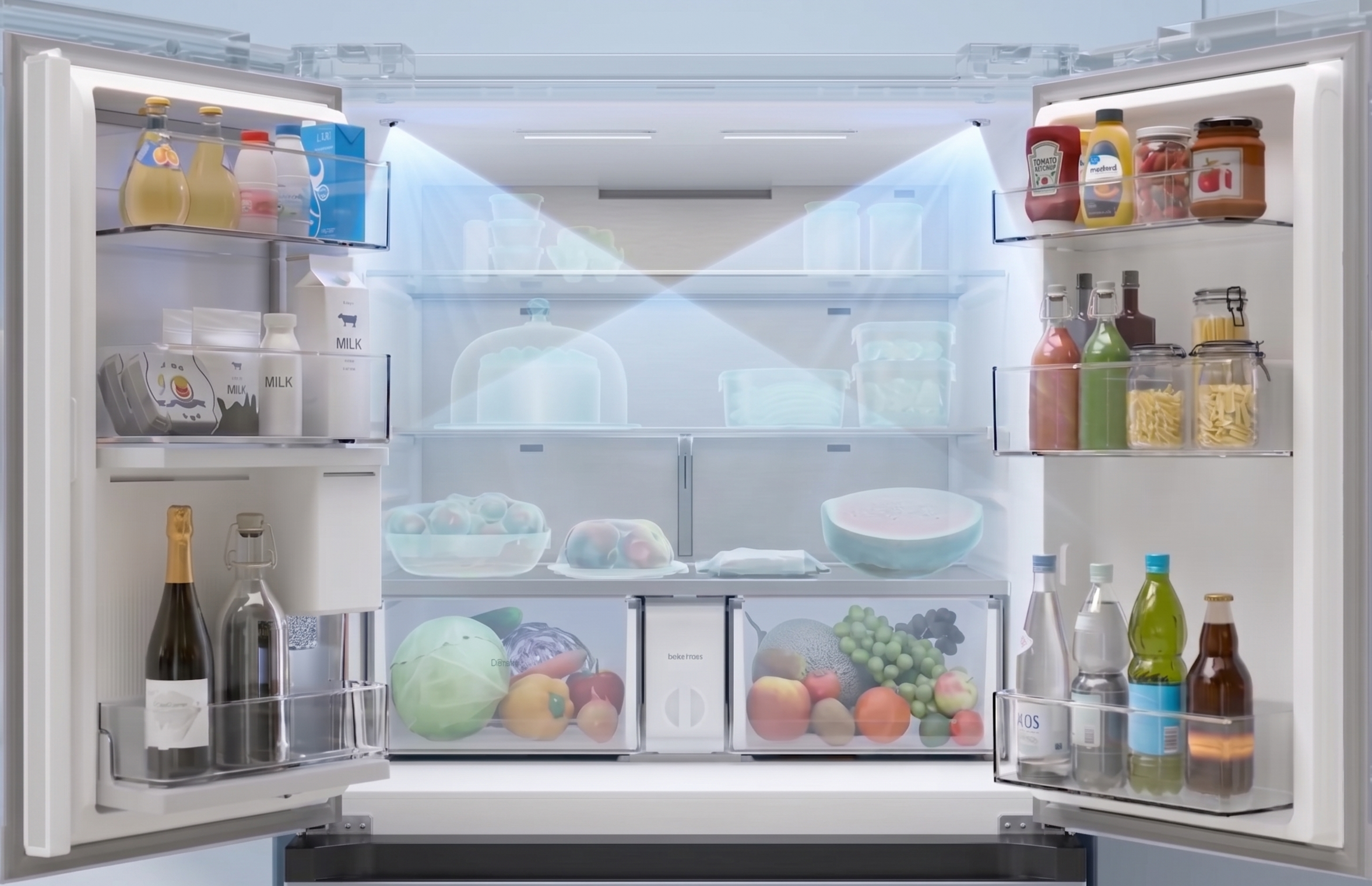
  <img src="/assets/images/SmartRefrigerator.png" alt="Smart Refrigerator" style="max-width: 50%; height: auto; border-radius: 8px;" />
</div>

<p>It has been fascinating to read about the different applications that are being hooked up to OpenClaw or Hermes or the like. 
Imagine you have an agent hooked up to the camera feed from your refrigerator. The agent would analyze the different items 
and signal what’s running low so that you can pick up those items on the way back home in the evening. You get home and 
realize that you are out of cheese and are mad as to why the agent didn’t put cheese on the list. Well, in many (most?) 
cases, a proactive reasoning loop is absent in such setups. For instance, the milk can may have occluded the view where the 
cheese is usually kept. Without this insight, the frustration may recur tomorrow for some other item.</p>

<p>In a similar vein, fulfilling the key premise of Wearables - users should not have to take the phone out of their pocket - 
rests on providing robust support for reasoning when things fail (owing to, say, for instance,  camera pose, motion blur, 
poor lighting/glare or occlusion). This is particularly important for displayless glasses as a silent failure would result 
in poor user experience (the user would have to find his/her phone and key in their pincode).</p>

<p>A key limitation of traditional VLMs is “textual drift” (or “visual blindness”). These models are distilled on text-only 
reasoning datasets and hence are completely disconnected from the actual pixels of the image. On the other hand, VRMs 
(Visual Reasoning Models) operate either in the pixel or continuous abstract latent space and consequently, fare better 
than VLMs. To this end, I penned down, along with <a href="https://www.linkedin.com/in/bhargav-bhushanam-b5876125/" target="_blank" rel="noopener">Bhargav</a>, <a href="https://www.linkedin.com/in/aayush382/" target="_blank" rel="noopener">Aayush</a>, <a href="https://www.linkedin.com/in/siramakrishnan/" target="_blank" rel="noopener">Siddharth</a> and <a href="https://www.linkedin.com/in/saurabhagarwal137/" target="_blank" rel="noopener">Saurabh</a>, the evolution of reasoning 
models - refer to the PDF linked below. Feedback welcome!</p>

<p>Thanks <a href="https://www.linkedin.com/in/vchandra/" target="_blank" rel="noopener">Vikas</a> for the feedback on the early versions of the writeup.</p>

<hr />

<iframe src="/assets/docs/VRM%200.4.pdf#view=FitH" width="100%" height="600" style="border: 1px solid #e1e4e8; border-radius: 6px; margin-top: 32px;">
  <p>Your browser can't display the embedded PDF.
     <a href="/assets/docs/VRM%200.4.pdf">Download Paper</a></p>
</iframe>

<p style="margin-top: 12px;">
  <a href="/assets/docs/VRM%200.4.pdf" target="_blank" download="">Download Paper</a>
</p>]]></content><author><name>Arun Kejariwal</name></author><category term="vision" /><category term="reasoning" /><category term="on-device AI" /><summary type="html"><![CDATA[From scene understanding to visual reasoning, we have come a long way. As wearables becomes ubiquitous, visual reasoning will play a vital role. Why?]]></summary><media:thumbnail xmlns:media="http://search.yahoo.com/mrss/" url="https://akejariwal.github.io/assets/images/SmartRefrigerator.png" /><media:content medium="image" url="https://akejariwal.github.io/assets/images/SmartRefrigerator.png" xmlns:media="http://search.yahoo.com/mrss/" /></entry><entry><title type="html">World Models and How Children Learn</title><link href="https://akejariwal.github.io/2026-03-22-world-models.html" rel="alternate" type="text/html" title="World Models and How Children Learn" /><published>2026-03-22T00:00:00+00:00</published><updated>2026-03-22T00:00:00+00:00</updated><id>https://akejariwal.github.io/world-models</id><content type="html" xml:base="https://akejariwal.github.io/2026-03-22-world-models.html"><![CDATA[<div style="text-align: center; margin-bottom: 2em;">
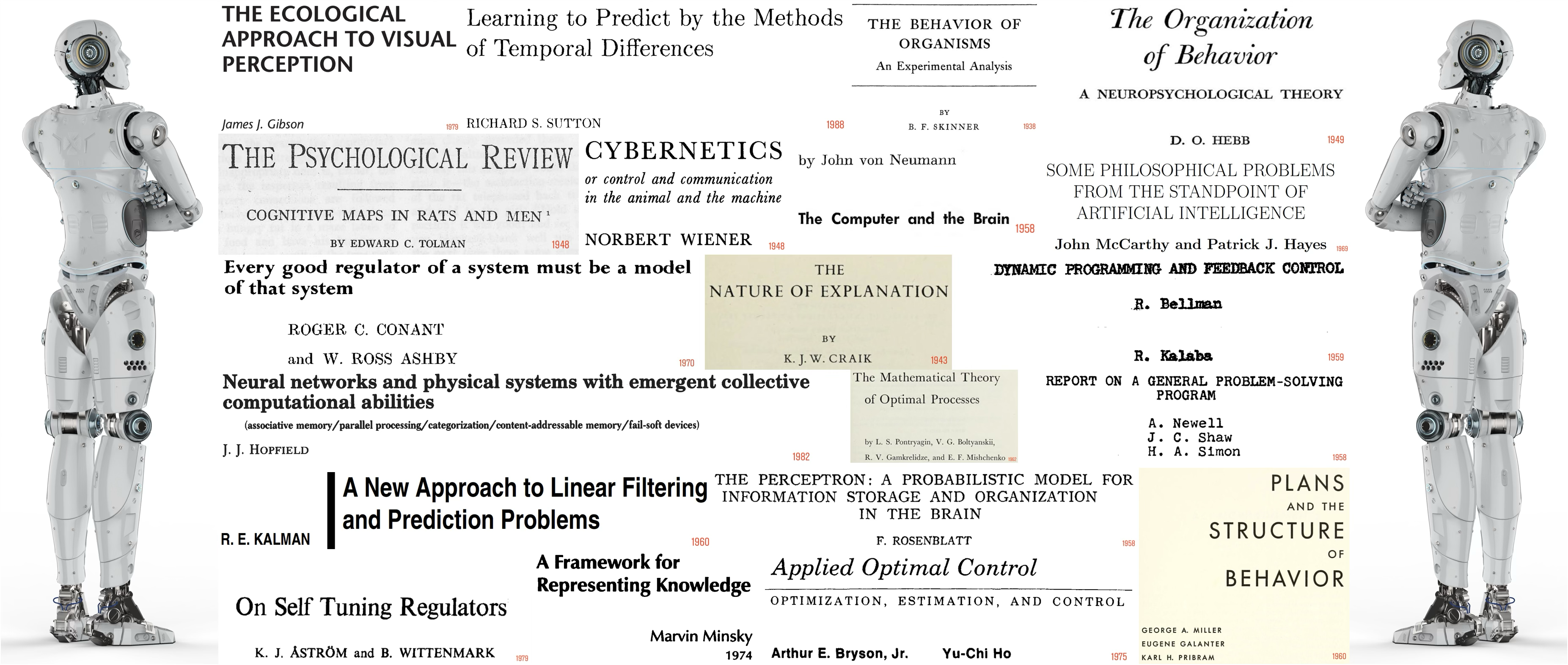
  <img src="/assets/images/World Models.png" alt="Wrold Models" style="max-width: 100%; height: auto; border-radius: 8px;" />
</div>

<p>As LLMs have gotten progressively better — winning IMO gold medal, solving long standing problems in several disciplines, 
coding agents becoming ubiquitous etc. — there has been a push towards Physical AI. To this end, developing World Models 
has been a rage nowadays. Recently, <a href="https://www.linkedin.com/in/jitendra-malik-60b55823b/">Jitendra Malik</a> and 
<a href="https://www.linkedin.com/in/yann-lecun/">Yann LeCun</a> shared a <a href="https://www.youtube.com/watch?v=9B4kkaGOozA&amp;t=3885s">brief historical perspective</a> 
and some <a href="https://www.youtube.com/live/7Gyuar7nMz0?t=20566s">recent work on World Models</a>.</p>

<p>It’s fascinating that the early work can be traced back to the early 1940s and how multi-disciplinary — cross-cutting, for example, psychology, cognitive science and neuroscience, model Predictive Control (MPC) — it has been.</p>

<p>It has been interesting to see the learning evolution — Observation → Imitation → Explore-and-Exploit (/reinforcement) — with my 5 yr and 1.5 yr old. I have come across a few instances of the following:</p>

<ul>
  <li>Carey and Bartlett’s <a href="https://eric.ed.gov/?id=ED198703">“Fast Mapping”</a> — a mechanism whereby a child can learn a new word or concept from a single, incidental exposure and retain that knowledge long-term.</li>
  <li>Karmiloff-Smith’s <a href="https://www.sciencedirect.com/science/article/abs/pii/0010027786900405">“Representational Redescription”</a> — reorganization of current information leading to a child developing explicit knowledge about a complex topic they were never formally taught.</li>
</ul>

<p>The above, coupled with self-reflection (which has shown benefits to tasks such as coding), could drive learning acceleration and consequently have material implications for science — for example, discovery on the positive side and security on the negative side.</p>]]></content><author><name>Arun Kejariwal</name></author><category term="world models" /><category term="physical AI" /><category term="LLMs" /><summary type="html"><![CDATA[As Physical AI gains momentum, developing World Models has received lot of attention. Are there nuggets one can borrow from deacdes long research on how kids learn?]]></summary></entry></feed>